
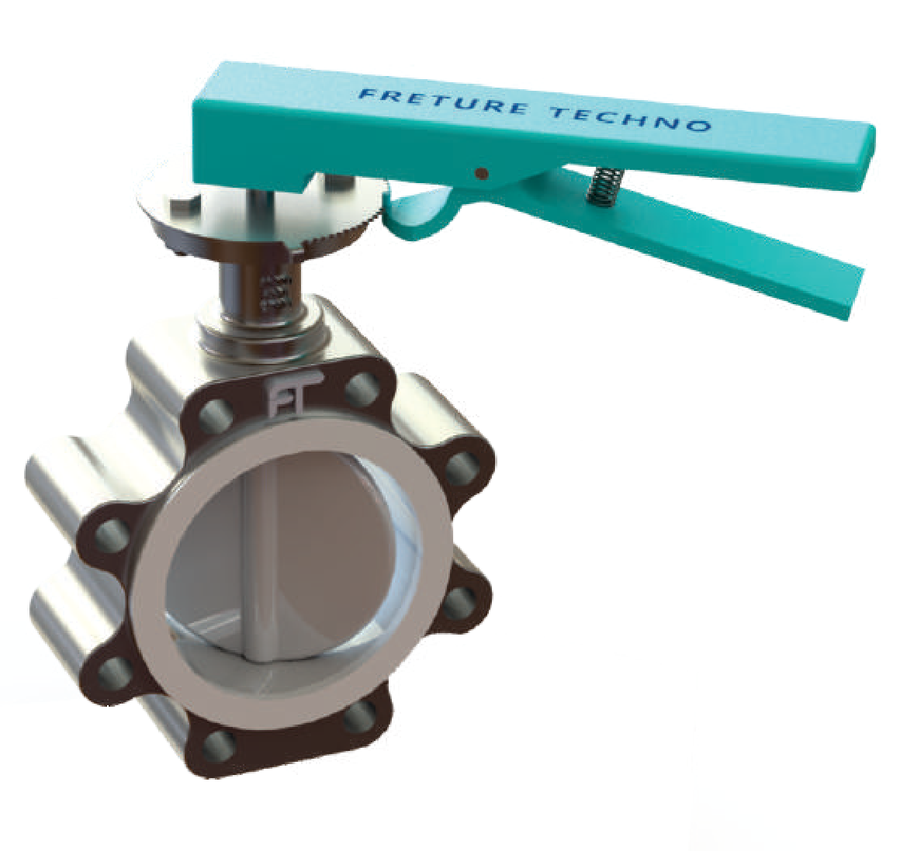
Butterfly valves were originally built for applications that didn't demand a tight shutoff, but modern rubber and elastomeric liners now give them shutoff performance close to a dedicated isolation valve, at a fraction of the material and installation cost of a gate valve.
A lined butterfly valve takes that further: the corrosion-resistant liner extends across the full bore and doubles as the gasket face against the companion flange, so — unlike a loose liner — it isn't stretched or damaged during installation, and it keeps the anti-rust surface finish intact through years of humid or chemically aggressive service.
The disc's tight interference fit with the liner delivers bubble-tight sealing without deforming over time, so operating torque stays low and stable across the valve's life — a key reason these valves pair well with compact pneumatic or electric actuators in space-constrained skids.
Our Freture Techno lined butterfly valves cover 50 NB to 600 NB across #150–#600 (PN 10–PN 16), in flanged, lug or wafer configurations, rated -190°C to 350°C. If you're specifying valves for a corrosive or humid process line, reach out and we'll help you size the right liner and seat combination.